Loading...


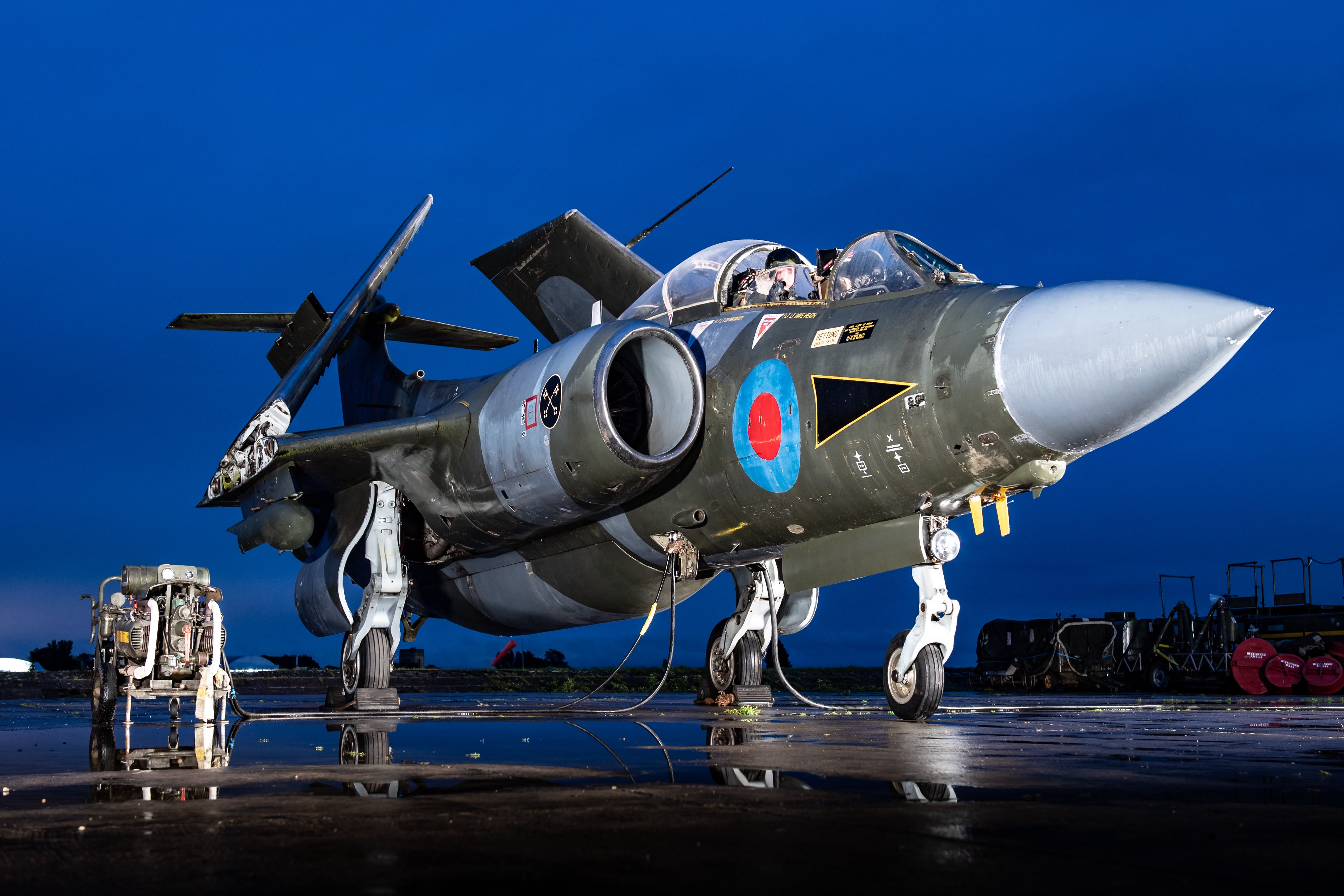
Few British military aircraft possess the presence of the Blackburn Buccaneer.
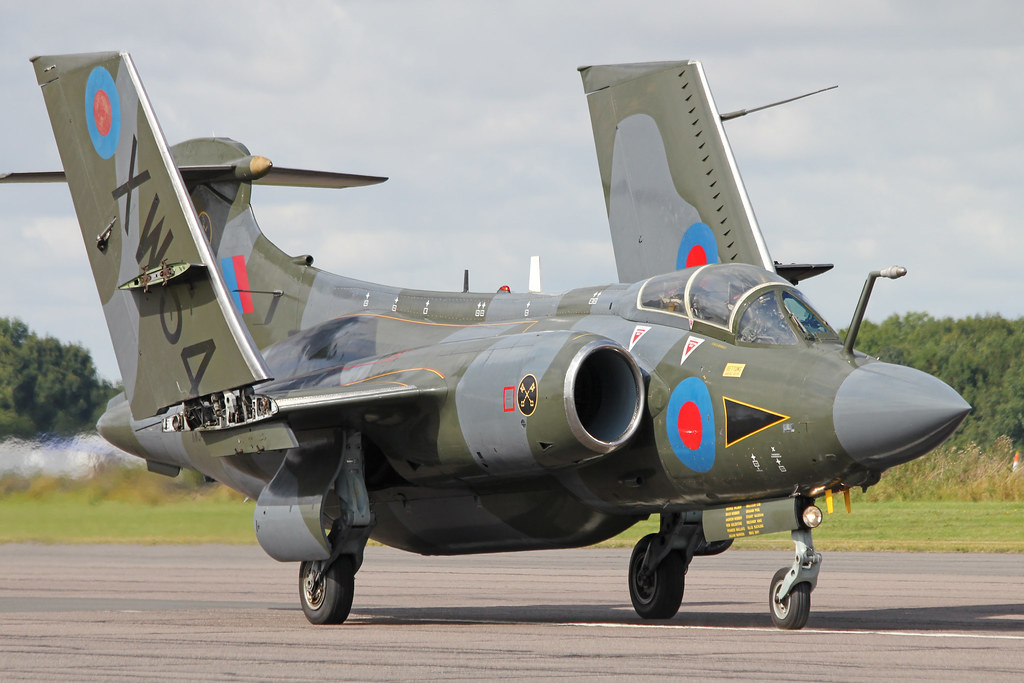
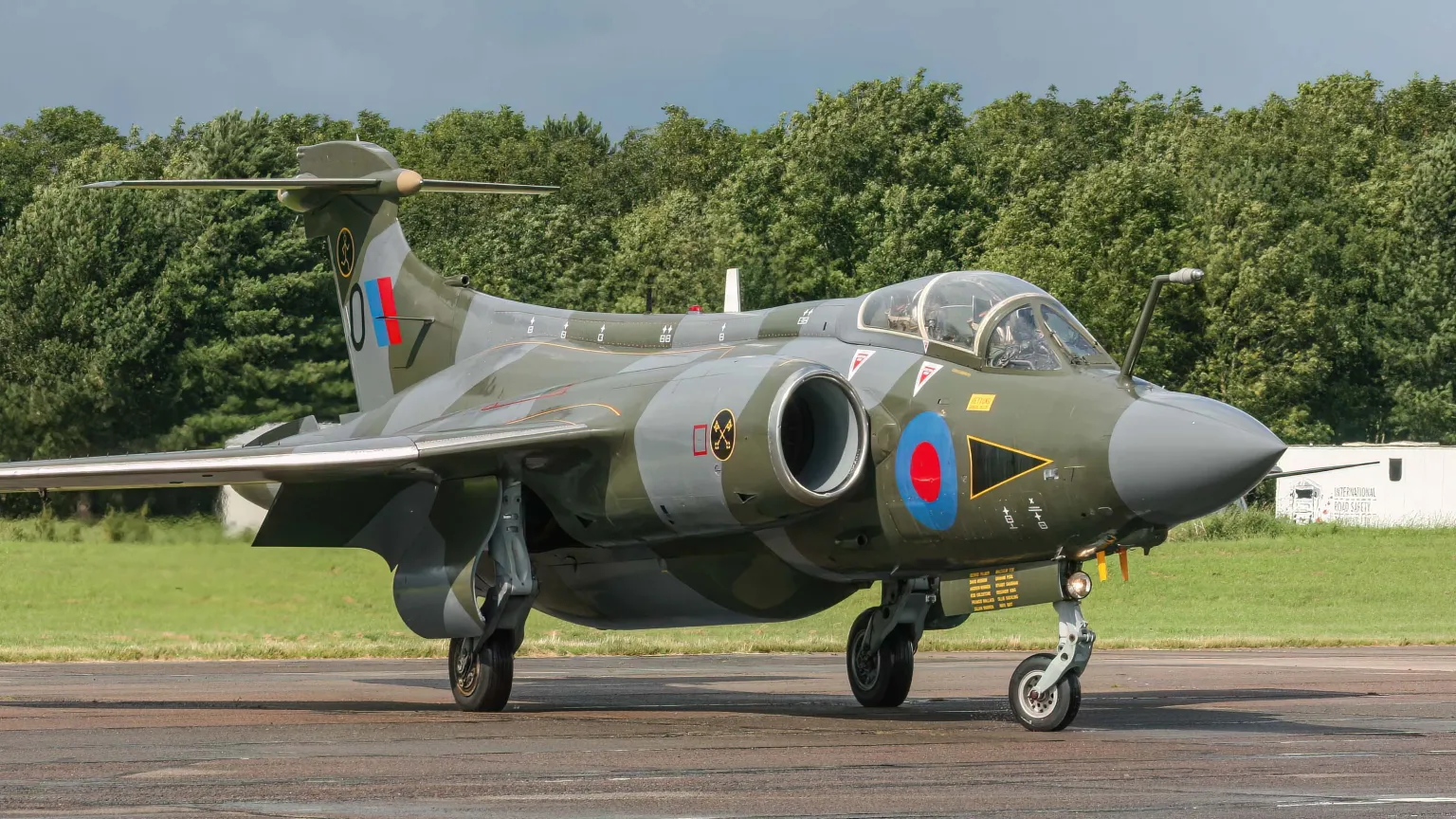
Designed during the Cold War to fly fast and exceptionally low, the Buccaneer became one of the most capable strike aircraft operated by the Royal Navy and Royal Air Force. Its broad fuselage, folding wings, rotating bomb bay, split airbrake and purposeful stance made it instantly recognisable - and an outstanding subject for aviation photography.
On Saturday 7 November, COAP will join The Buccaneer Aviation Group at Cotswold Airport for a specially arranged afternoon and evening 'Ops' shoot featuring their brilliantly restored airframes..
Running from 13:00 until 19:30, the event will take us from the available autumn daylight through sunset and the blue hour before concluding with fully illuminated night scenes.
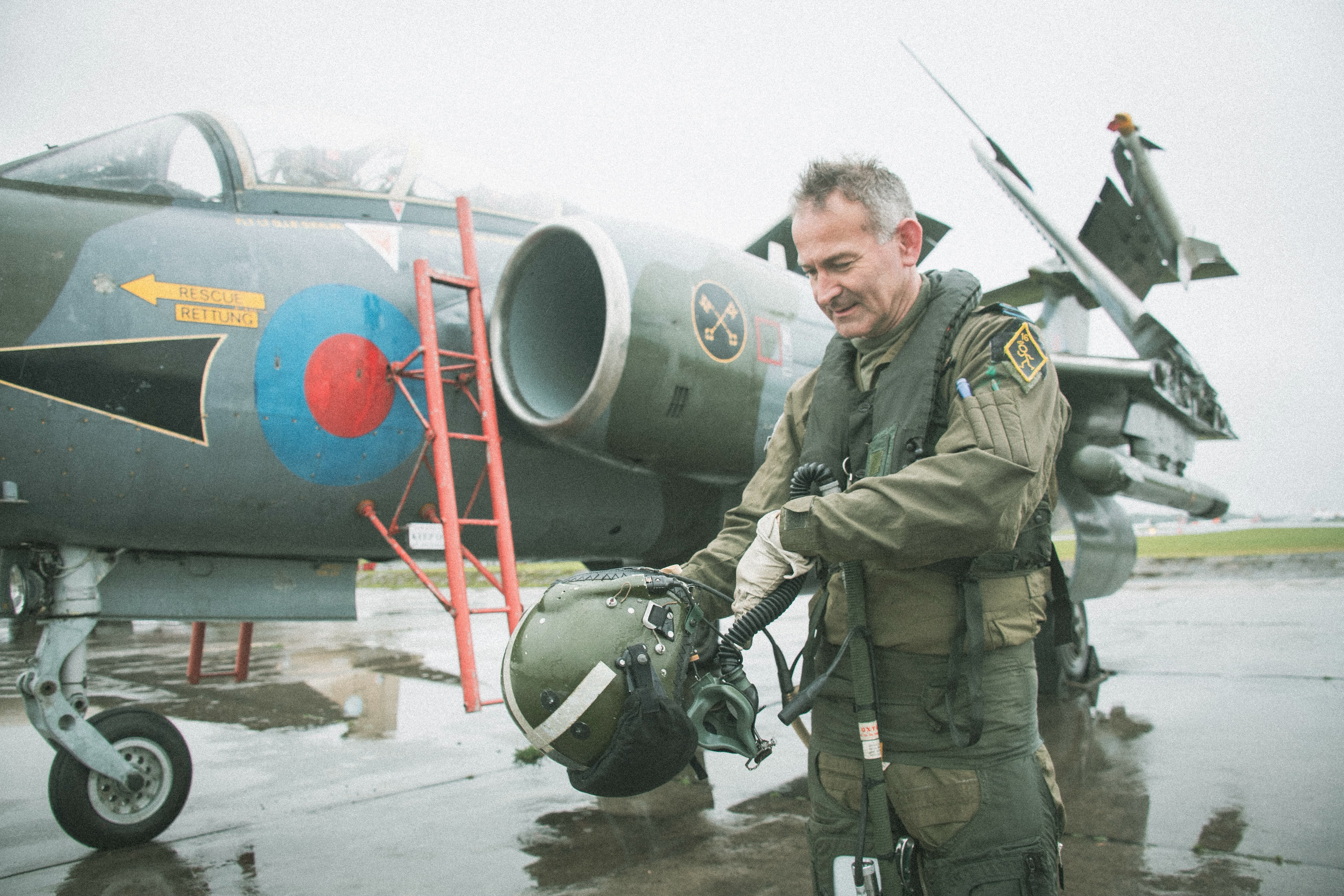
The programme will include an engine run (subject to operational/serviceability/weather caveats), carefully staged operational scenarios and a varied selection of clean aircraft compositions. Re-enactors wearing historically appropriate uniforms and equipment will portray Buccaneer pilots, observers and ground personnel, helping us recreate scenes inspired by the aircraft’s military career.
Built for low-level strike
The Buccaneer was conceived in response to the growing threat posed by Soviet warships during the 1950s. Operating from Royal Navy aircraft carriers, it was designed to approach its target at very low level, using speed and the curvature of the Earth to delay detection by enemy radar.
Rather than relying upon extreme speed at high altitude, the Buccaneer used a remarkably strong airframe and excellent low-level stability to penetrate beneath an opponent’s radar coverage. Its performance in turbulent air became one of the aircraft’s defining characteristics.
The early Buccaneer S.1 was powered by de Havilland Gyron Junior engines, but the definitive S.2 introduced the more powerful Rolls-Royce Spey. This transformed the aircraft’s performance and gave it the power needed for carrier operations while carrying a useful fuel and weapons load.
When Britain’s conventional aircraft carriers were withdrawn, the Buccaneer transferred from the Fleet Air Arm to the RAF. Together with newly manufactured RAF aircraft, these former naval Buccaneers provided Britain with an effective long-range strike and maritime-attack capability.
RAF Buccaneers operated from bases including Honington, Laarbruch and Lossiemouth. They served in the nuclear and conventional strike roles, supported NATO operations in Europe and regularly demonstrated their low-level abilities during major international exercises.
Although designed for Cold War operations, the Buccaneer ultimately saw combat during the 1991 Gulf War. Twelve RAF aircraft deployed to the Middle East, initially providing laser designation for Tornado strike missions before also carrying their own laser-guided bombs. Their successful deployment came only three years before the type was finally retired from RAF service in March 1994.
The Buccaneer Aviation Group (TBAG)
The participating aircraft are being supplied and operated by The Buccaneer Aviation Group, a not-for-profit organisation devoted entirely to preserving the Blackburn Buccaneer and the memories of those who designed, built, maintained and flew it .(the only one of its kind!)
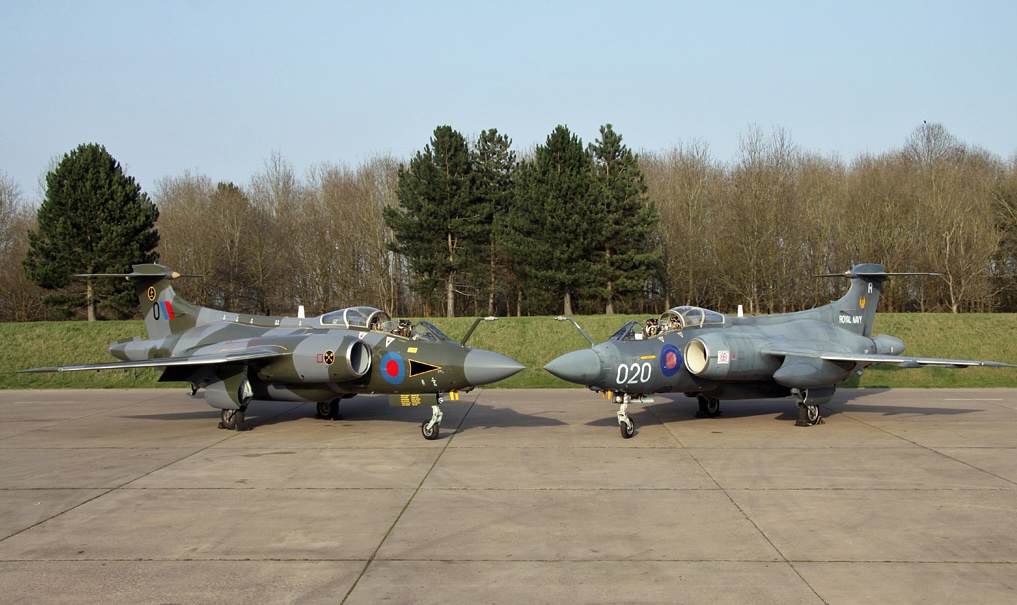
TBAG has cared for its two principal Buccaneers, XX894 and XW544, since the organisation developed from the individual restoration teams working on the aircraft at Bruntingthorpe.
When aircraft running at Bruntingthorpe came to an end, the two Buccaneers were moved by road to Cotswold Airport (Kemble) in August 2020. The volunteer team subsequently returned both aircraft to ground-running condition and continues to maintain them as living examples of Britain’s Cold War aviation heritage.
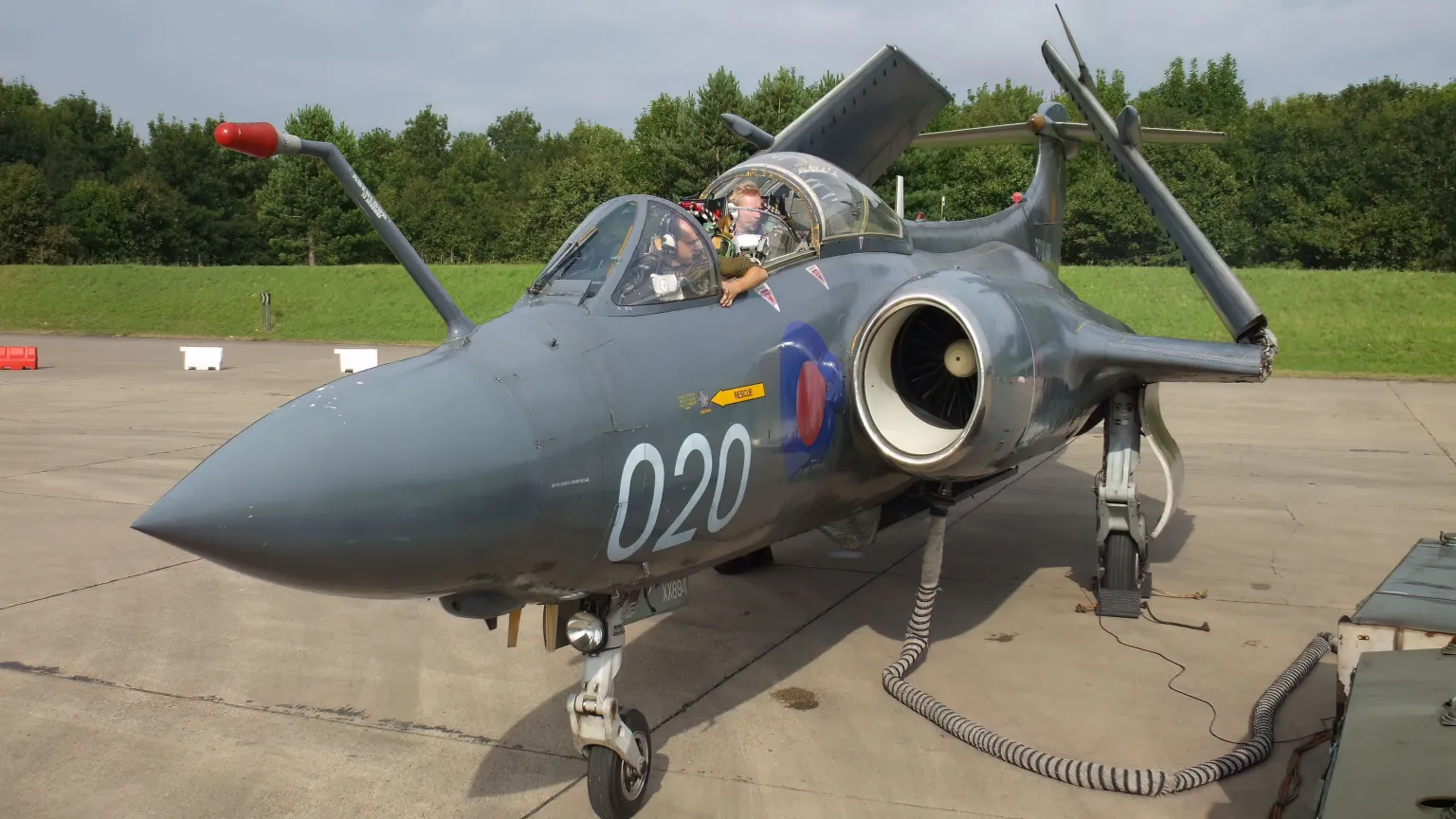
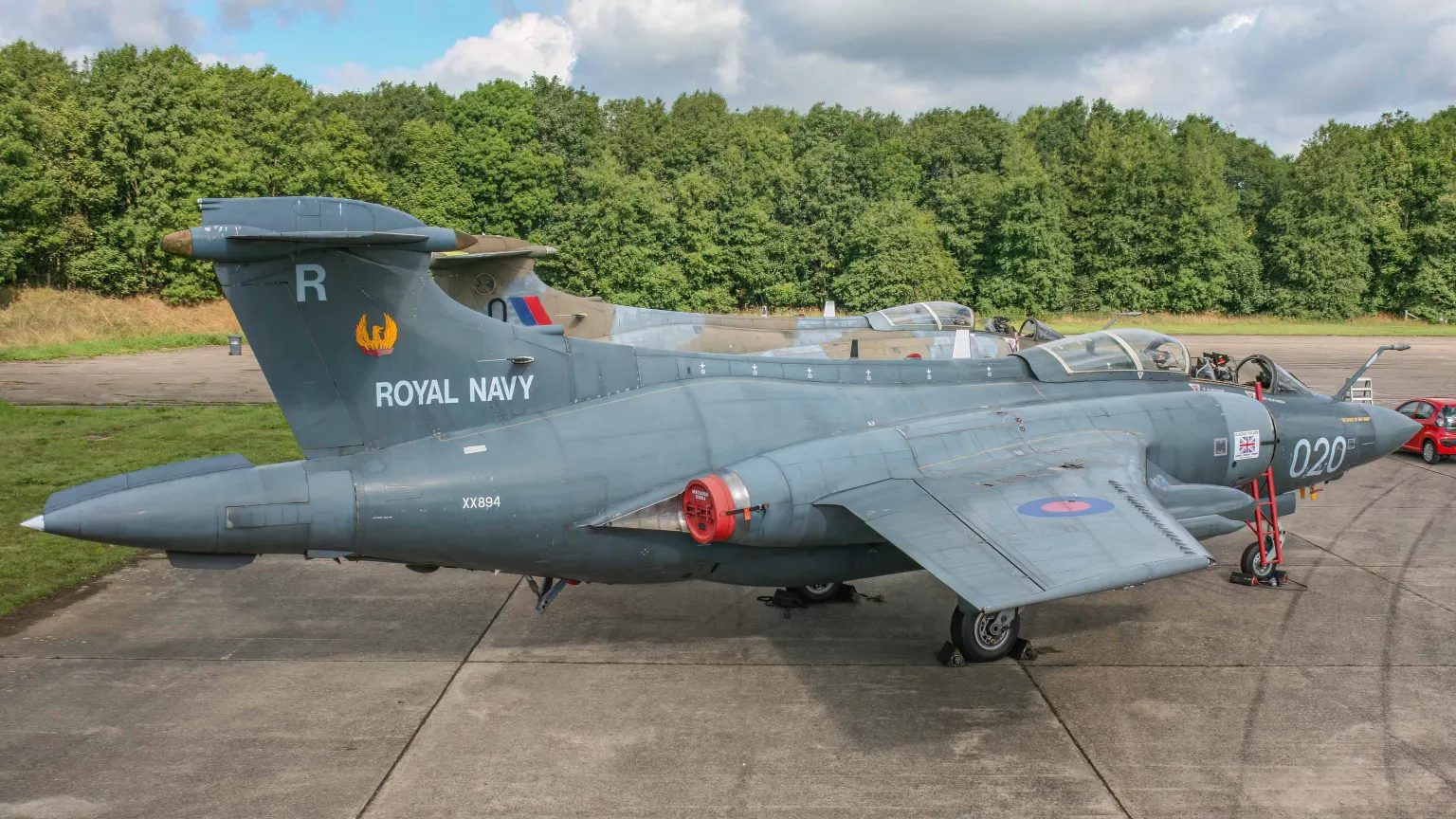
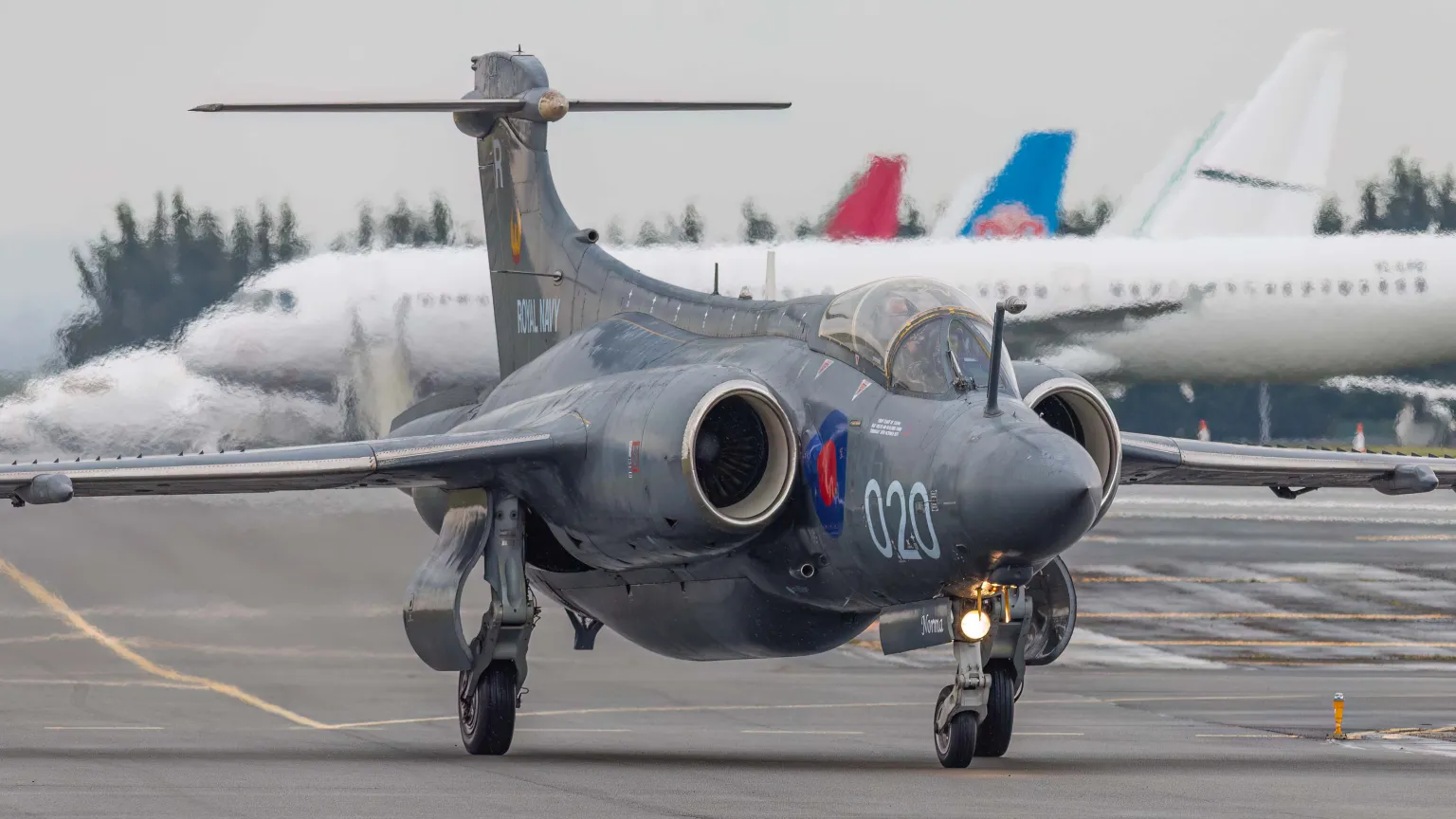
Buccaneer S.2B XX894
XX894 began its RAF flying career with 16 Squadron at RAF Laarbruch during 1975. It later served with 15 Squadron, 208 Squadron, 237 Operational Conversion Unit and 12 Squadron. In 1980, XX894 participated in Exercise Red Flag in the United States. Ten years later, it received a distinctive overall grey anniversary scheme marking 75 years of 12 Squadron.
Its most significant operational chapter came during the 1991 Gulf War. Finished in the temporary desert-pink scheme and carrying the name Aberlour with the code “O”, XX894 deployed as part of the RAF Buccaneer force. On 27 February 1991, the aircraft attacked and destroyed an Antonov An-12 transport on the ground at Shaykh Mazhar airfield. According to TBAG’s history, this made XX894 the only Buccaneer credited with destroying another aircraft during the conflict.
For the Buccaneer’s retirement events in 1994, XX894 was repainted to represent Fleet Air Arm Buccaneer XV869, carrying the number “020”. This naval presentation has sometimes led observers to assume that it was originally a Royal Navy aircraft, although its flying career was spent with the RAF.
XX894 made its final flight in April 1994. Following many years of determined preservation work, it was returned to running condition and performed its first public taxi run at Cotswold Airport in 2025.
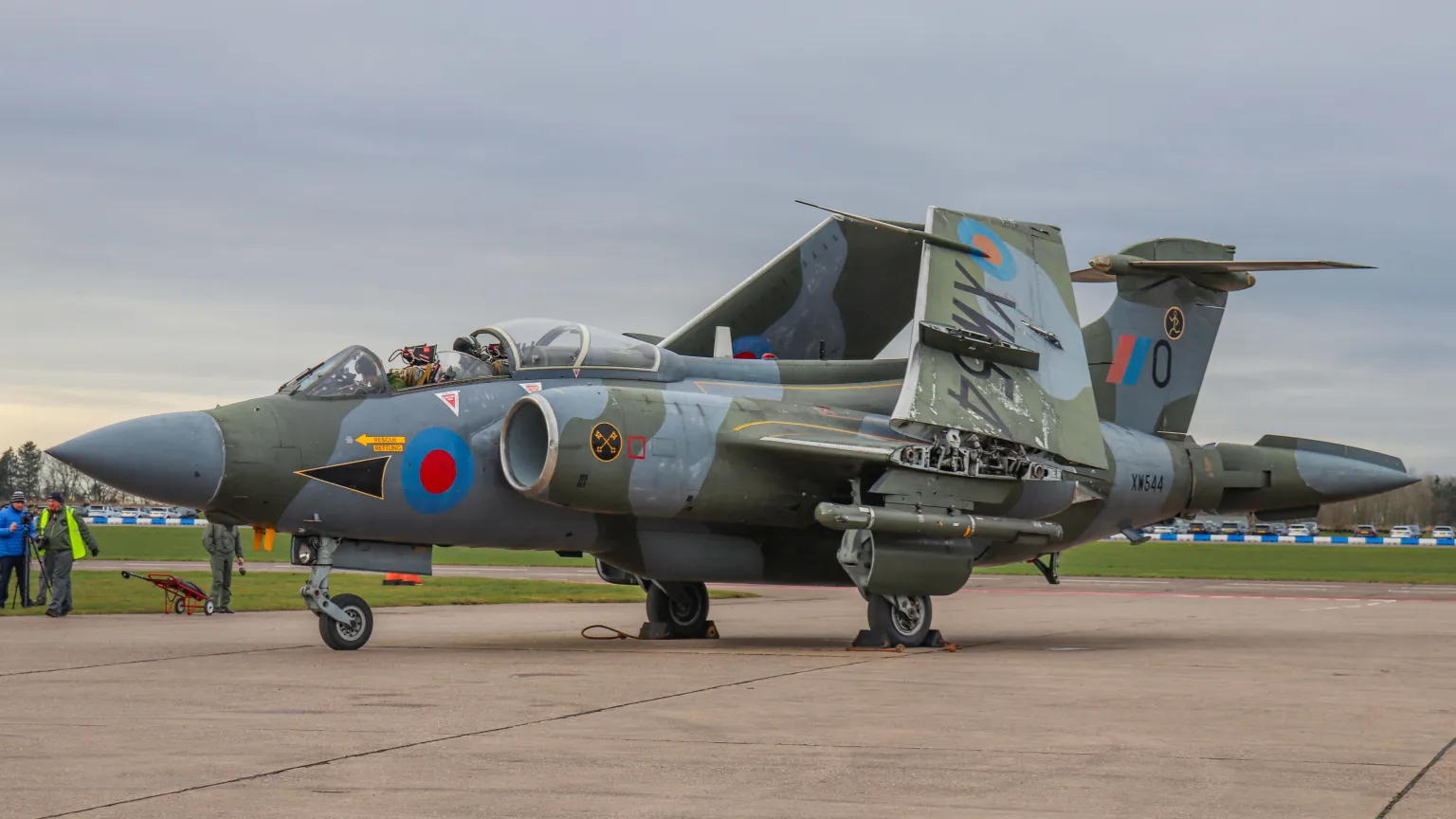
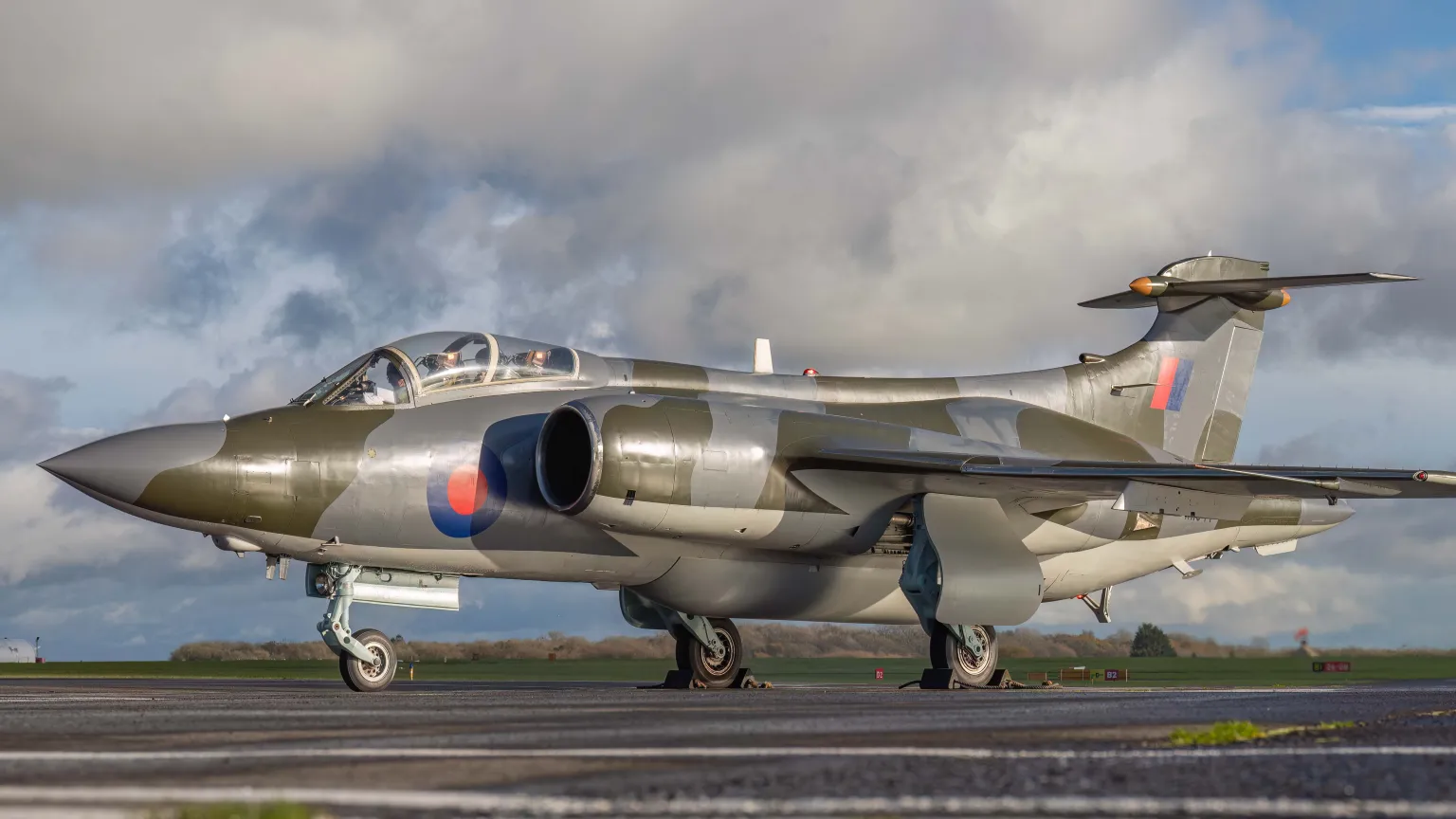
Buccaneer S.2B XW544
XW544 was delivered to the RAF in 1972 and entered service with 15 Squadron at RAF Laarbruch. It transferred to 16 Squadron in 1979 and subsequently returned to 15 Squadron.
The aircraft was withdrawn from flying service in July 1983 after recording 2,227 flying hours. It was then transferred to No. 2 School of Technical Training at RAF Cosford, where it became a ground instructional airframe with the maintenance identity 8857M. After retirement and a lengthy period in storage, XW544 moved to Bruntingthorpe in 2004. Four years of restoration work culminated in its first engine run since RAF retirement in May 2008.
XW544 moved to Cotswold Airport with XX894 in 2020 and was soon returned to running condition by TBAG’s volunteers.
Bringing the flight line back to life
The purpose of this event is not simply to photograph two preserved aircraft. Working with TBAG and our re-enactors, we will build a series of scenes showing the people and activity that surrounded an operational Buccaneer flight line.
Pilots and observers will be photographed preparing for and returning from imagined sorties. Ground personnel will work around the aircraft using appropriate clothing, equipment and poses to recreate the atmosphere of an active dispersal or flight line.
There will also be dedicated opportunities to photograph the aircraft without re-enactors, allowing participants to create clean portraits, wider two-aircraft compositions and detailed studies of the Buccaneer’s unusual design.
We hope the planned engine run will provide the sound, movement and atmosphere that can only come from a live aircraft. Such runs as an important means of exercising the engines and hydraulic systems while checking maintenance work and investigating any outstanding technical issues.
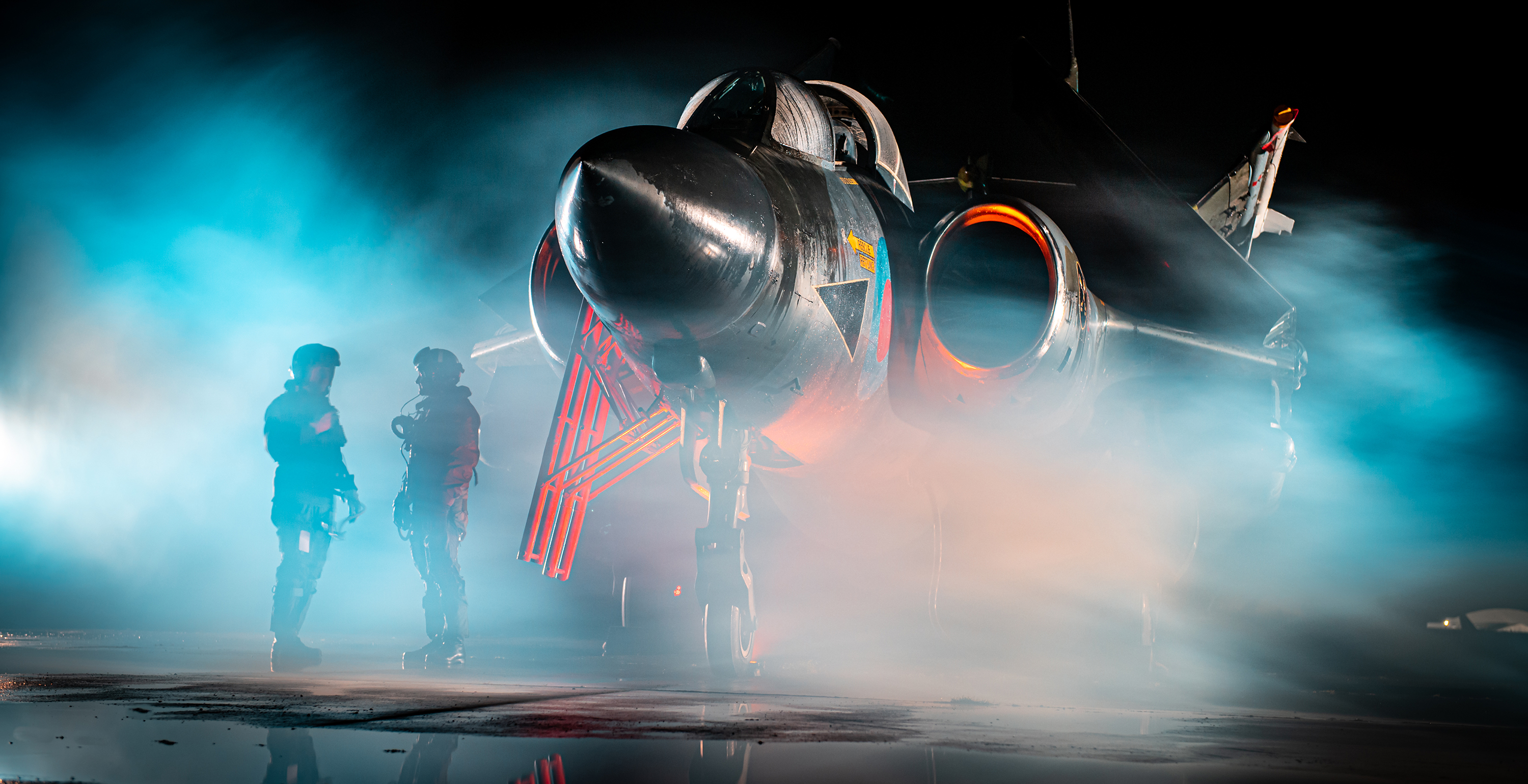
As daylight fades, our attention will turn towards sunset and the blue hour. COAP lighting will be used both around and, where access and safety requirements permit, within the aircraft to emphasise the Buccaneer’s shape, cockpit and operational character.
The changing balance between the remaining ambient light and our carefully positioned illumination should produce a very different selection of images from those available during a conventional daytime visit.
Once darkness falls, the aircraft will become the centre of a series of fully lit night scenes. Re-enactors, cockpit illumination and external lighting will be used to recreate the appearance of a Buccaneer squadron working into the evening, with the aircraft able to fold their wings to make for some memorable imagery.
Cotswold Airport provides a particularly fitting location. Originally RAF Kemble, the airfield opened in 1936 and became an important maintenance and aircraft preparation base. It later became closely associated with the Red Arrows, which were based there until moving to RAF Scampton in 1983. The former RAF surroundings provide an appropriate backdrop for this carefully staged Cold War shoot.
This promises to be a varied and atmospheric afternoon celebrating not only the Buccaneer itself, but also the aircrew, ground personnel and volunteer engineers who kept these remarkable aircraft operating.


Saturday 7 November 2026 - Cotswold Airport
Arrival and safety briefing
The event will begin at 13:00.
After registration, participants will receive an essential airside safety briefing and an introduction to the afternoon’s programme. The precise order of aircraft movements and staged scenes will remain flexible to accommodate the weather, available light and TBAG’s operational requirements.
Daylight photography
Photography will begin using the available autumn daylight.
The two principal Buccaneers will be presented in a variety of individual and combined arrangements. Initial opportunities will include clean aircraft portraits, wider views and detailed photography without re-enactors.
Aircrew and ground personnel will then be introduced to create a series of operational scenes. These will include pilots and observers preparing for a sortie, groundcrew working around the aircraft and general flight-line activity.
Buccaneer engine run
We hope the programme will include a live engine run by one of TBAG’s Buccaneers.
This will provide opportunities to photograph the aircraft with its engines operating and systems alive. The exact content of the run will be determined by TBAG and will depend upon aircraft serviceability, airfield restrictions and operational requirements.
Sunset and blue-hour photography
As the afternoon light fades, photography will concentrate on the transition through sunset into the blue hour.
COAP’s external lighting will be introduced progressively, balancing the illuminated aircraft and re-enactors against the remaining colour in the sky.
Cockpit and internal lighting will also be used where aircraft access, serviceability and safety arrangements permit. This should provide opportunities for both wider environmental images and tighter studies of the cockpit and crew.
Night photography
Once darkness has fallen, the shoot will continue under COAP lighting.
The final scenarios will include a mixture of clean aircraft views and staged operational scenes with pilots and ground personnel. Aircraft positions, re-enactor placement and lighting will be adjusted during the evening to provide a varied collection of images.
Photography is scheduled to conclude at approximately 19:30.

Saturday 7 November 2026
Cotswold Airport, Gloucestershire
Formerly RAF Kemble
Event times
The event runs from 13:00 until 19:30.
Final arrival, parking and security instructions will be sent to ticket holders before the event. Please arrive in good time, as entry to the airside area will be managed as a group.
Ticket price
Tickets are priced at £95 per person
Places will be limited to maintain the quality of the photographic positions and allow the event to operate safely around live aircraft.
Aircraft
The event is expected to include shoots with the Buccaneers supplied by The Buccaneer Aviation Group. TBAG’s principal aircraft are:
Buccaneer S.2B XX894
Buccaneer S.2B XW544
Aircraft participation, appearance, configuration and serviceability remain subject to operational requirements.
Engine run
The aircraft will be loud, and suitable hearing protection is strongly recommended. Participants must remain within the designated viewing area and follow instructions from TBAG, COAP and airfield personnel.
The engine run is intended to be stationary. A taxi run, aircraft movement under power or operation of particular hydraulic systems should not be assumed unless confirmed on the day.
A hi viz is mandatory.
Photography
The session will include:
- Individual aircraft portraits
- Two-aircraft compositions
- Clean scenes without personnel
- Pilot and observer scenarios
- Groundcrew and flight-line scenes
- Engine-run photography
- Sunset and blue-hour images
- Externally illuminated night scenes
- Cockpit and internal lighting where available
Suggested lenses
A useful full-frame selection would include:
24–70mm for full-aircraft and operational scenes
70–200mm for compressed views, personnel and engine-run photography
16–35mm for dramatic close perspectives
A fast 35mm, 50mm or 85mm prime for lower-light work
APS-C users should allow for the crop factor when selecting lenses. A zoom beginning around 16–18mm, together with a 55–250mm or 70–300mm lens, should cover most situations.
Tripods
A sturdy tripod is strongly recommended for the blue-hour and night sections.
Please bring a quick-release plate, remote release if used, spare batteries and a small torch or head torch. A red-light mode is useful because it is less disruptive to other photographers. Tripods must not be positioned where they obstruct aircraft movements, re-enactors or other participants.
Camera settings and equipment
Participants should be prepared to work across a wide range of light levels. Useful equipment includes:
- Spare batteries, as cold weather and long exposures reduce battery life
- Sufficient memory cards
- A lens cloth and camera rain cover
- Remote shutter release
- Small torch or head torch
- High-visibility vest will be required on this shoot
- Hearing protection for the engine run
Weather and clothing
November conditions at an exposed airfield can be cold, wet and windy.
Warm layered clothing, waterproof outerwear and sturdy waterproof footwear are essential. Participants will be outside for up to six and a half hours, including several hours after sunset.
A hig viz vest is mandatory.
Food and refreshments
Participants should bring suitable food, water and hot drinks unless the joining instructions confirm that refreshments will be available.
Short breaks will be provided where the programme permits, but the schedule may be adjusted to make the best use of the weather and changing light.
Fitness and accessibility
The event takes place within an operational airfield environment. Participants should expect to stand for extended periods and walk over tarmac, concrete and potentially uneven surfaces. Anyone with restricted mobility should contact COAP before booking to discuss the available arrangements.
Airside security
Access will be limited to the areas designated by Cotswold Airport and TBAG. Participants must remain with the group and comply immediately with all instructions.
Photography of unrelated airport operations, stored aircraft or restricted areas may not be permitted. Full details will be provided during the briefing.
Important disclaimer
The participation, operation and positioning of historic aircraft are always subject to serviceability, weather, airfield requirements and the decisions of TBAG’s engineering and operating team. The planned engine run may be altered or cancelled if required for technical or safety reasons. COAP and TBAG will make every reasonable effort to provide the advertised photographic opportunities, but safety and aircraft preservation will always take priority.
.jpeg)
.jpeg)
.jpeg)
.jpeg)
.jpeg)
.jpeg)
.jpeg)
.jpeg)
.jpeg)